
Below some examples of common enamel defects
 Blisters - Blisters are a common enamel defect, which is characterized by appearance of circular holes & bubbles in a cooled enameled surface.
  Copperheads - Copperheads are reddish brown spots, which may vary in size from almost invisible to 3.2 mm.
  Fishscaling of porcelain/vitreous enamel coatings - Fishscaling is an enameling defect, which is characterized by small enamel particles chipping off.
  Lumps - Lumps are common enamel defects, which are characterised by rounded raised areas with typically a diameter between 3 to 12 mm.
 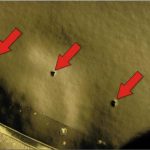 Scaling - Scaling is a common enameling defect, which is caused by contamination with materials with a higher melting temperature than enamel.
 Related services
- Assisting industrial enamelers with troubleshooting enameling processes & equipment